

Building the Design Foundation for a Growing Platform

Pantomath

Sep 23’ - Current
Role: Sole Senior Product Designer: owning design across product, brand, and marketing.
As the sole designer at Pantomath, a B2B Data Observability SaaS startup, I’ve led all design efforts across product, brand, marketing, and video. From 0→1 product launches to scaling a complex enterprise platform, I built the design foundation that supported rapid growth—always keeping product design at the core.
Key Achievements:
Brought on early in the company's journey (employee #14, founding designer) and helped scale both design and operations as the team grew past 50 employees.
Collaborated directly with the CEO, CTO, and Chief Product Strategist to shape product and brand vision, translating company strategy into design priorities.
Led all design efforts from seed stage through Series A, owning product, brand, and marketing design as the sole designer.
Built a scalable design system from scratch, enabling engineering to move quickly and consistently during high-growth phases.
Designed & Shipped 30+ product features, backed by user research and internal stakeholder interviews—including a full app redesign, advanced data engineering UX, and a next-gen multi-agent workbench projected to save enterprises hundreds of thousands annually.
Partnered closely with Sales and Marketing, helping scale AAR from ~$400K to $7M+ through high-impact design support across product, site, and campaigns.
My Process:
What's worked for me at Pantomath, pre- and post-AI: the tools got faster, the discipline didn't change.
Fundamentals before anything else
As the only designer, it would've been easy to skip user definition and SaaS fundamentals — progressive disclosure, hierarchy, established patterns — to move faster. I didn't, because getting those wrong is expensive to unwind later; getting them right is what let me move fast on everything downstream.Go wide, then ruthlessly simplify
I research the underlying problem first, iterate wide across several directions to stress-test it, then pull back hard to the simplest version that solves it cleanly.Design for the scale it'll actually run at
Pantomath's lineage views run against enterprise pipelines with thousands of assets — patterns that work in a clean mockup often break at real volume, so I design against actual scale, not an idealized version of it.
Pantomath Product Design
As the only product designer at Pantomath, I led the end-to-end design of a complex B2B SaaS platform used by data engineers to troubleshoot and monitor data pipelines.
Feature priorities weren't guesswork; I ran discovery synthesis across enterprise customer interviews, distilling recurring themes like health scoring, SLA tracking, and granular alerting into a tiered roadmap that shaped what got built next.
My work spanned user research, information architecture, high-fidelity design in Figma, and ongoing collaboration with engineering to ship features quickly and at scale.
From redesigning the entire app to building new AI-driven workflows, I focused on creating clarity in a highly technical, data-heavy environment.
Lately: I’ve worked Design Engineering into my work, taking more responsibility to design and push front-end changes myself, freeing up the engineering team.
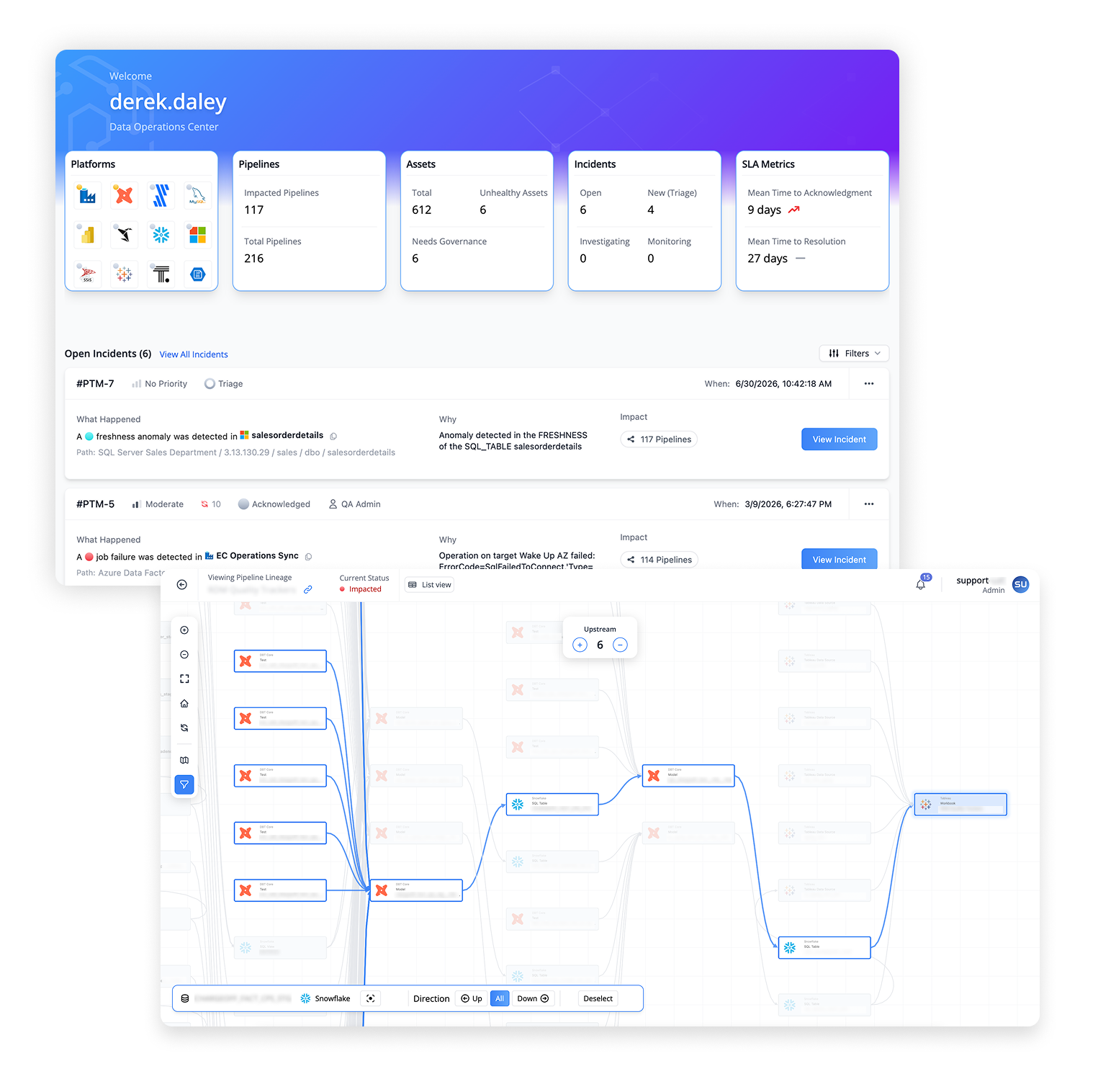
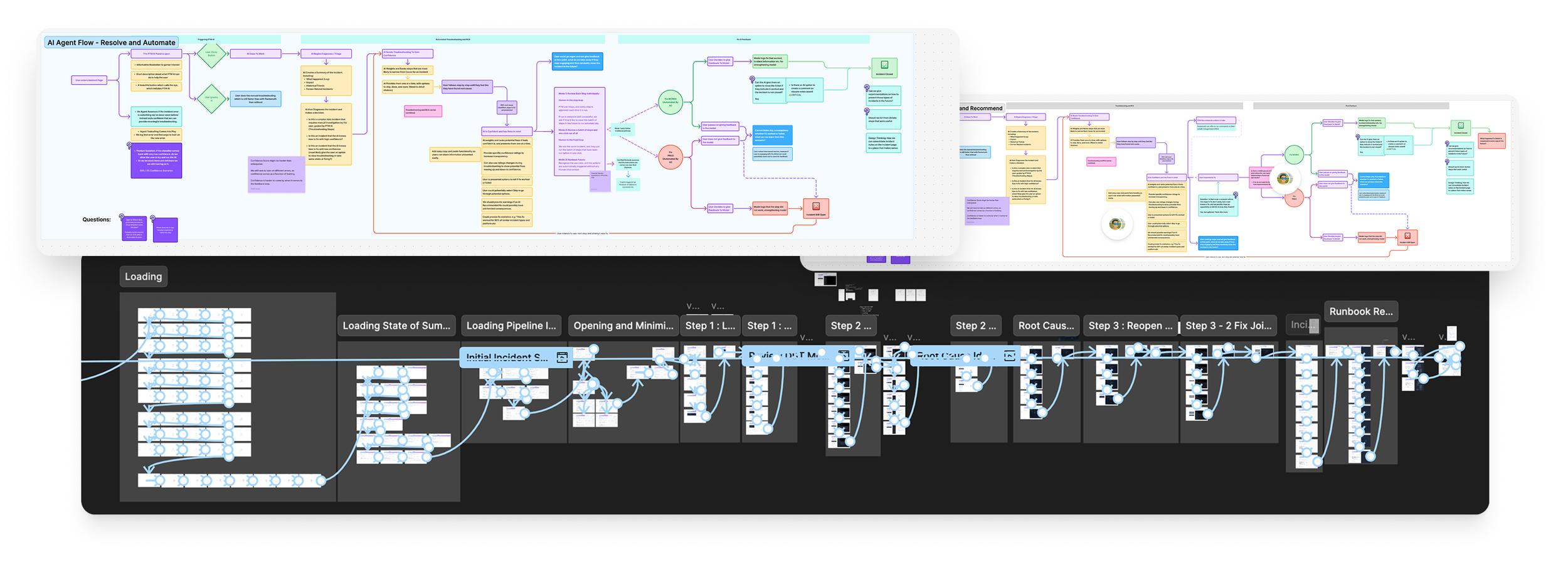
Image Above: Pantomath’s technical depth required detailed flows and prototypes to visualize complexity and uncover gaps early in the design process. These particular examples show the amount of prep-work that went into an early iteration of Pantomath AI, Pantomath’s in-app AI assistant.
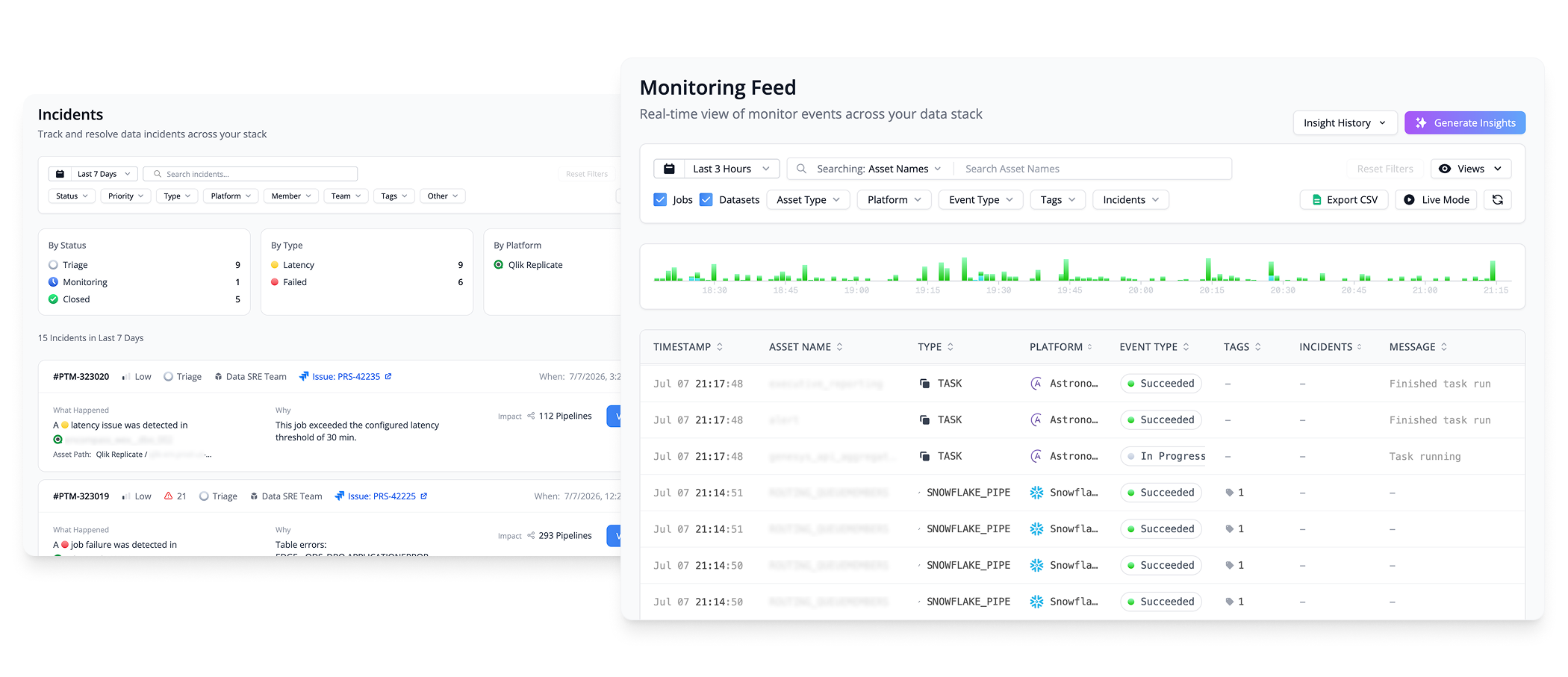
Pantomath’s product design is built on clean, sustainable SaaS principles. As the first and only designer, I made it a priority from day one to establish a high standard of quality—one I could personally stand behind. Balancing product design with broader responsibilities was often a challenge, but laying a strong foundation early was critical.
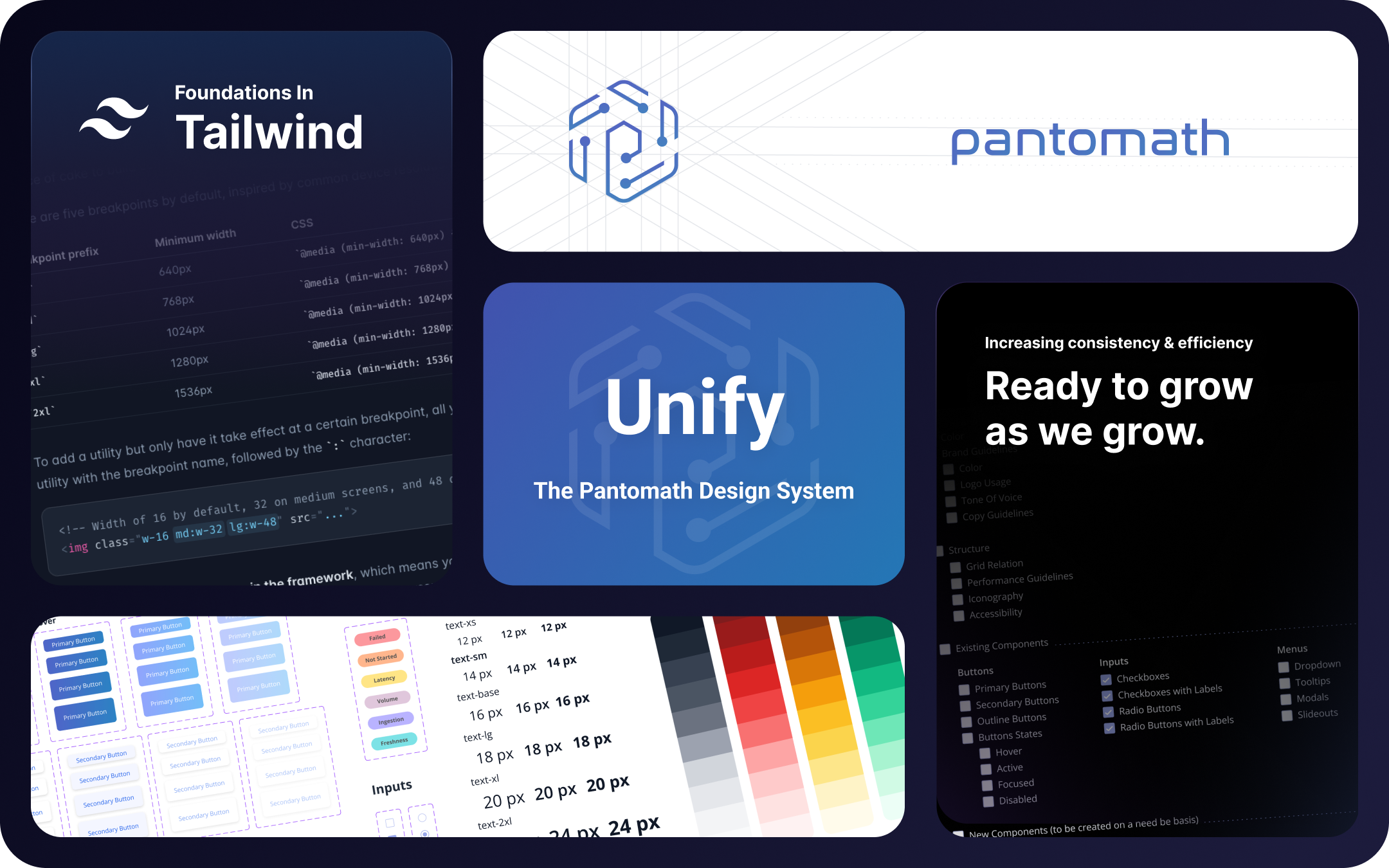
One thing that led to the success of our design + engineering efforts, was that I built a scalable design system from scratch within the first week of my tenure at Pantomath, setting the stage for rapid product growth and consistent execution across the platform.
The Pantomath Design System
Within my first week at Pantomath, I built a design system from the ground up; foundational work that has since accelerated engineering timelines and let the company ship new features at a fast, consistent pace.
I identified the core components needed to scale, then designed, documented, and presented the system to engineering for feedback and adoption, partnering closely with them on implementation to ensure consistency and reusability across the frontend.
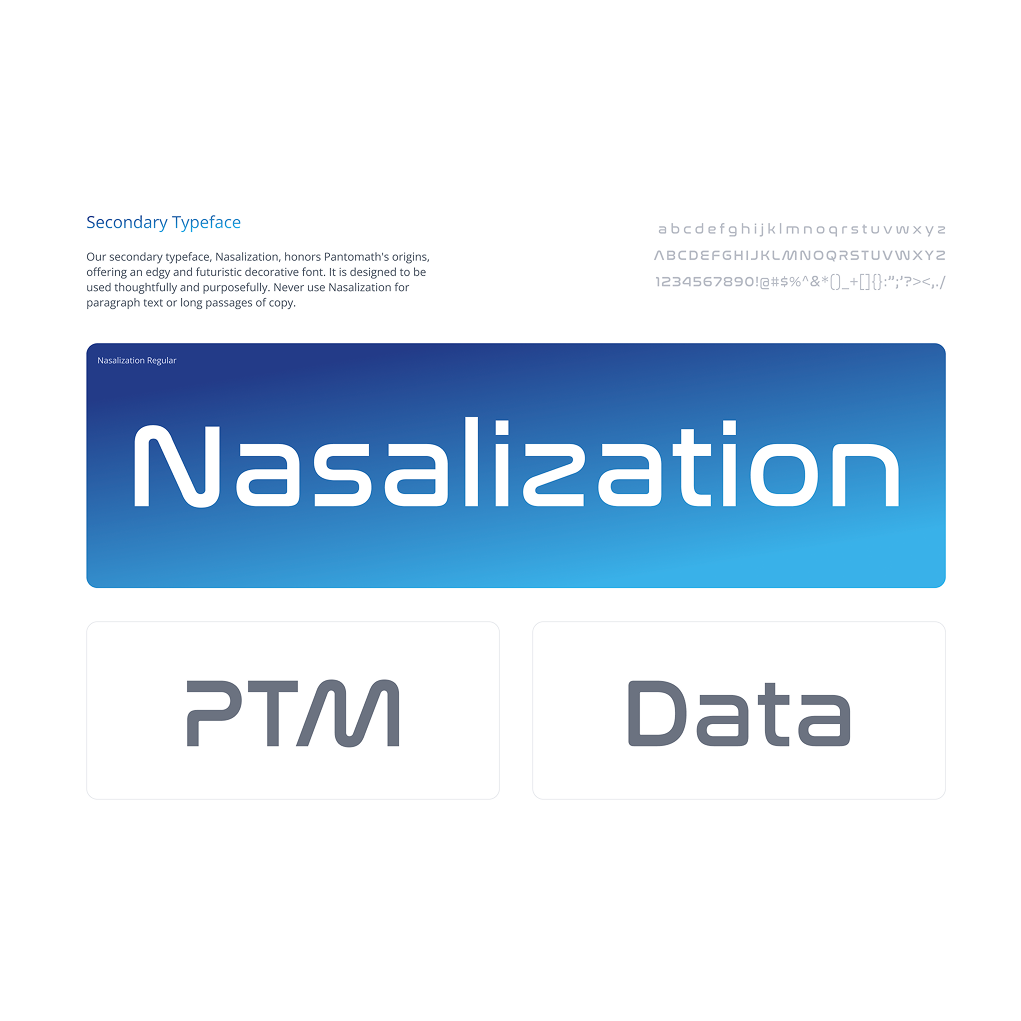
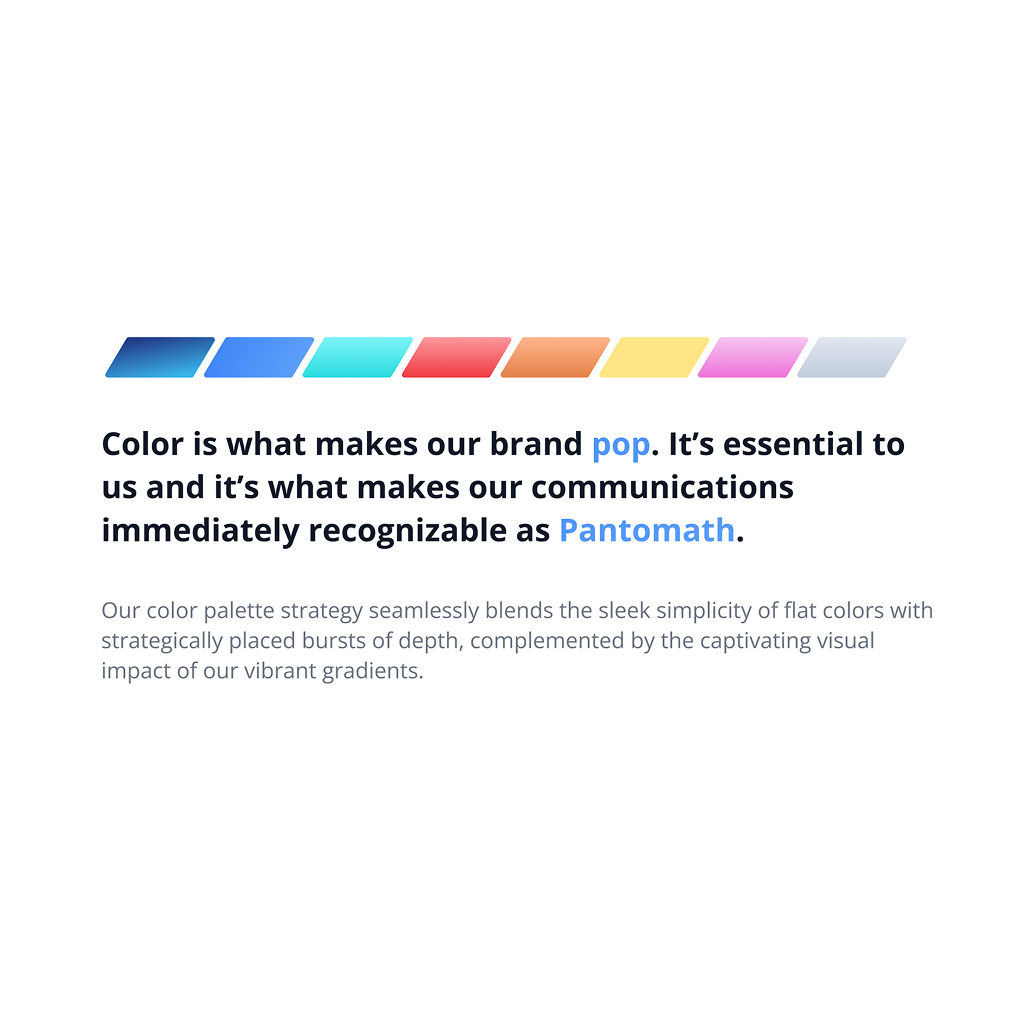
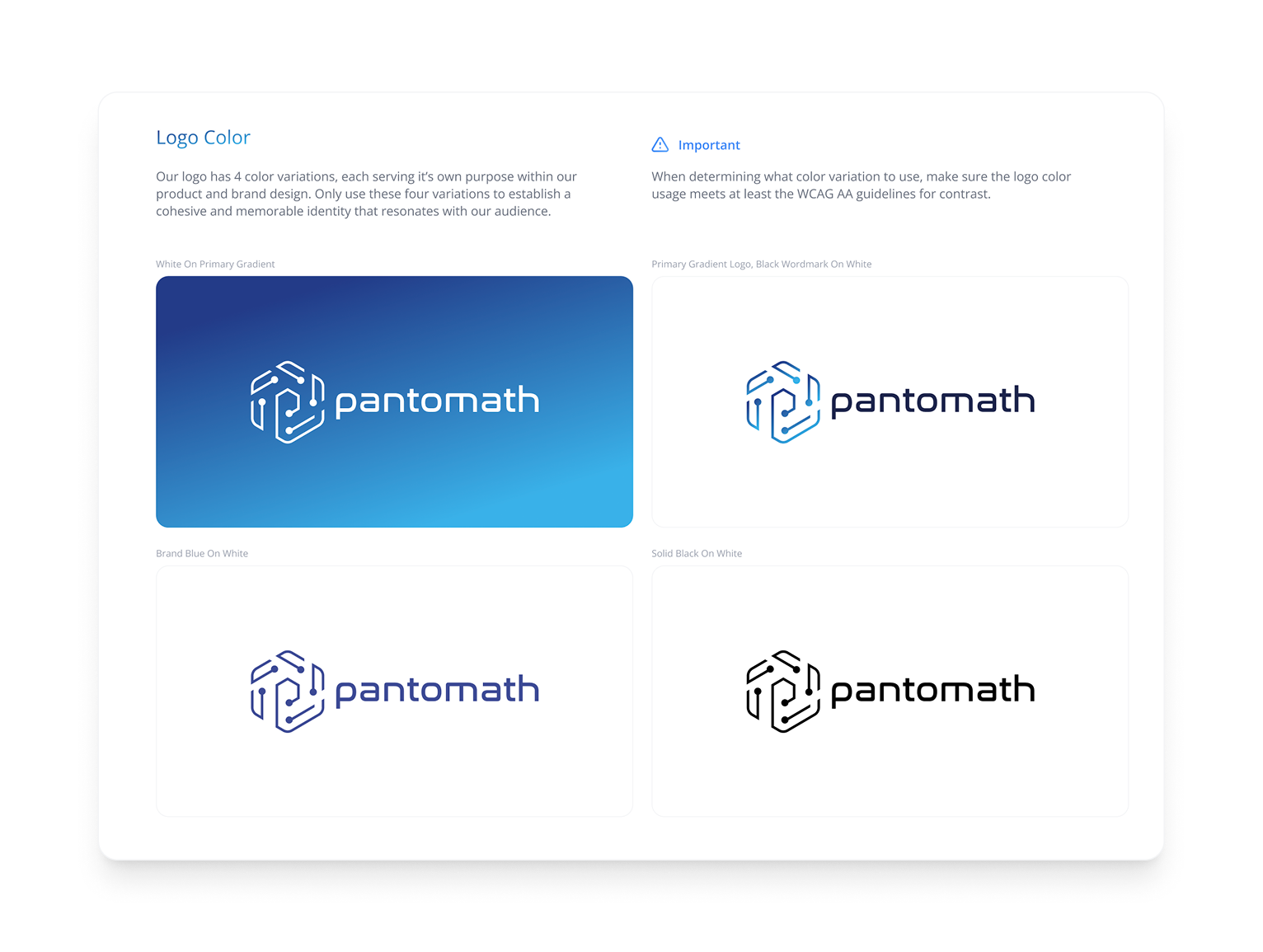
When I joined Pantomath, there was no visual consistency—teams used different logos, colors, and styles across assets. I created a unified set of brand guidelines to align marketing, sales, and product, ensuring consistency across every touchpoint. This brought cohesion to the brand and made it easier for teams to move fast without sacrificing quality.
The Pantomath Brand
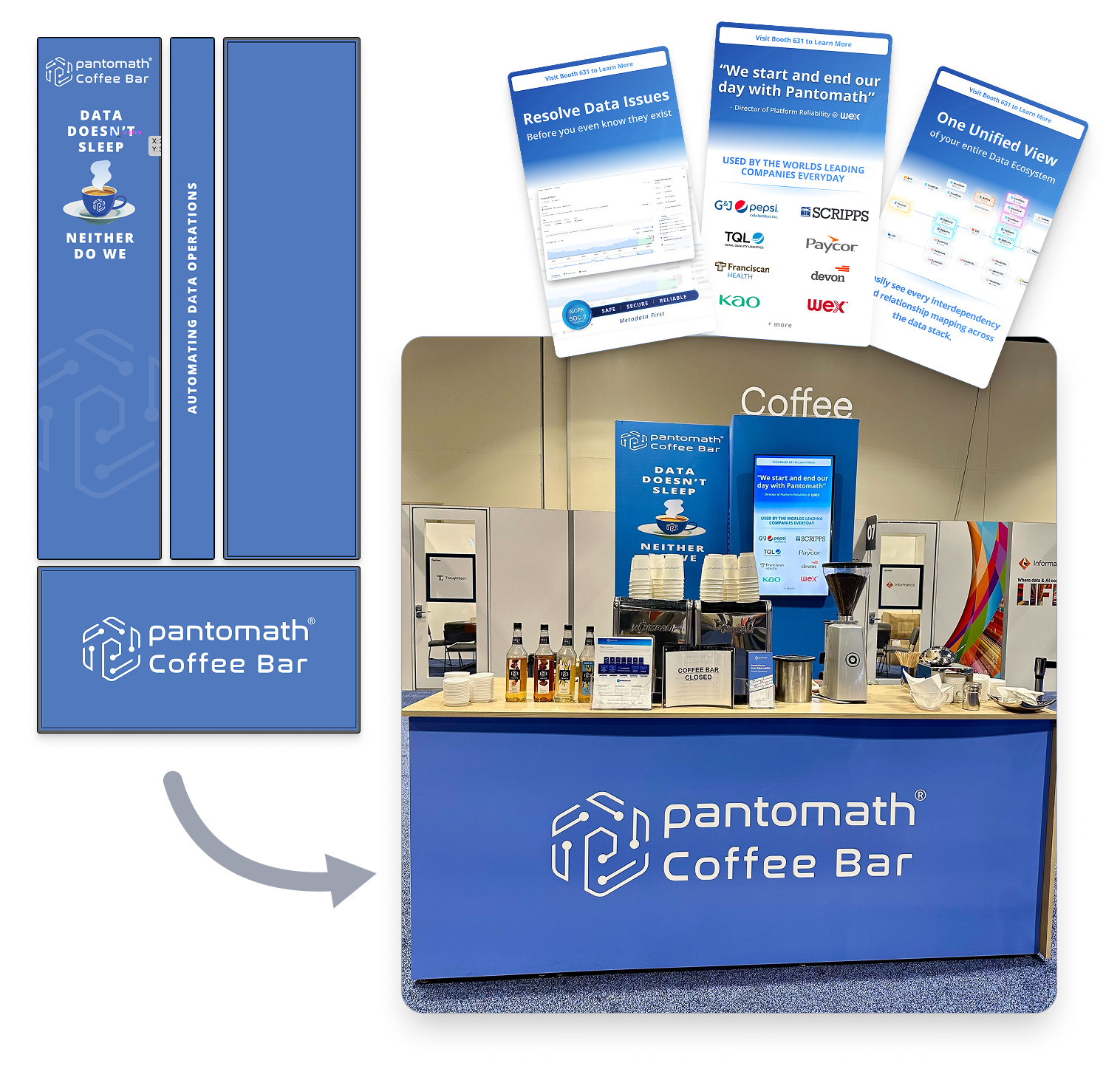
At Pantomath, I pushed beyond product design to take on a wide range of marketing initiatives.
I led the design of physical print materials—from brochures and one-pagers to full-scale conference backdrops—learning how to communicate clearly at different sizes and formats.
I also managed the launch of new blog and press articles, learning Webflow on the fly to update and maintain our marketing site and drive users to our funnel.
These projects helped shape our external voice and allowed me to own design across both print and web.
Marketing Design
I created a full explainer video to showcase Pantomath’s approach to AI—animating every frame by hand in After Effects over the course of two weeks. It was a challenging project that pushed my creative limits, but remains one of the most rewarding things I’ve built.